

If you’ve typed Urban Air Adventure Park into Google, you’re probably trying to answer one of four questions: what’s actually inside one of these parks, how much a visit will cost, whether there’s a location near you, and what you need to know before you show up. This guide covers all four in one place, along with the questions people usually search for right after.
What Is an Urban Air Adventure Park?
Urban Air is an indoor adventure park chain built around trampolines, but it’s grown well beyond that. The brand opened its first park in Southlake, Texas, in 2011 and has since expanded into a large national franchise network company materials cite more than 350 locations across the United States as of 2026 (source Urban Air Franchise). Each location is independently franchise-operated, which is worth remembering: attraction lineups, hours, and prices can look noticeably different from one park to the next, even within the same city.
Urban Air Attractions: What’s Inside a Park
No two Urban Air parks are identical, but most locations build their layout around a common set of attraction categories:
- Trampoline courts open jump, dodgeball courts, and wall to wall trampoline zones
- Warrior/ninja-style obstacle courses inspired by competitive obstacle shows, built for both kids and adults
- Ropes courses and Sky Rider zip lines aerial attractions that run above the main floor
- Climbing walls bouldering style walls with varying difficulty levels
- Tubes indoor playground a multi level soft play and slide structure aimed at younger kids many parks cap this area around age 9
- Go karts a growing number of newer or renovated parks feature an indoor electric go-kart track
- Slide attractions laser tag and virtual reality increasingly common additions at newer or recently upgraded parks
- Urban Cafe an on site food and drink counter at most locations

Because the attraction mix varies so much by franchise, it’s worth checking your specific local park’s attraction page (linked from the official location finder) before you go, especially if a particular attraction like go-karts or VR is the reason you’re visiting.
Urban Air Pricing: Tickets, Memberships, and Parties
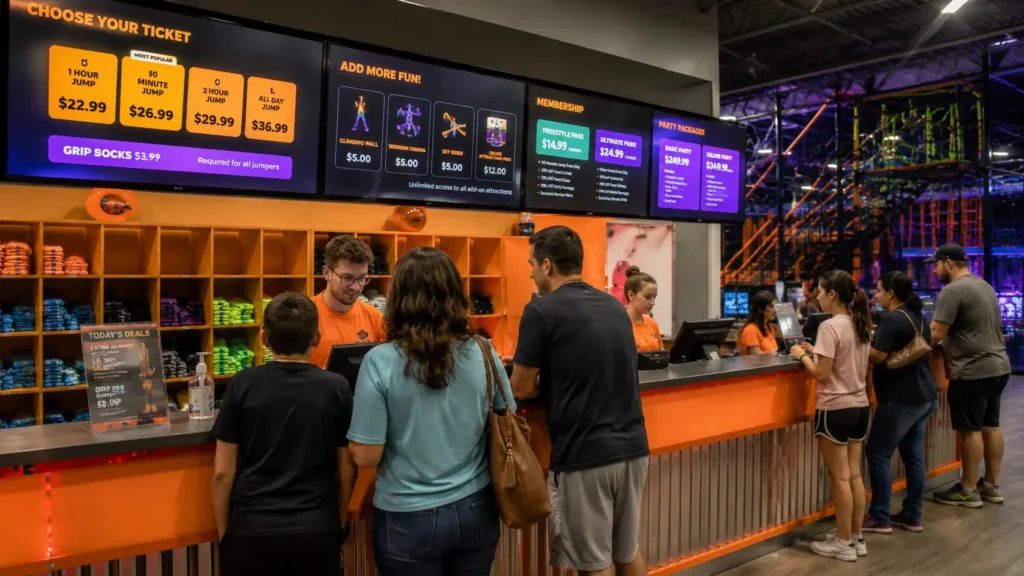
Urban Air doesn’t use one national price list; each franchise location sets its own pricing. That said, a few patterns hold across most parks.
Day passes are usually tiered by attraction access commonly labeled Deluxe Ultimate and Platinum, with higher tiers unlocking premium attractions like go karts or the ropes course. Single visit admission typically runs somewhere in the $18-$54 range per person depending on the tier and location, with weekend pricing often higher than weekday.
Memberships are where Urban Air pushes most of its value messaging. Monthly plans generally start around $10-$15 for limited access or Shorty tiers aimed at younger kids and range up to roughly $20-$30 a month for higher-tier unlimited access. Most memberships carry an initial 6-or-12-month commitment, some charge a one time processing or activation fee and benefits are typically tied to the specific home park where you sign up rather than usable at any location nationwide.
Birthday parties are a major part of the business model, with packages commonly starting somewhere in the $150-$400 range before add-ons like extra guests, upgraded food, or premium attraction access.
Because pricing is set locally rather than nationally, the only fully reliable way to get an exact number is to check the pricing page for the specific park you plan to visit and treat the figures above as planning ranges, not quotes.
Is an Urban Air Membership Worth It?
As a rough rule of thumb, a membership starts paying for itself once you’re visiting two to three times a month, since the per-visit cost drops well below a single day pass at that frequency. Occasional visitors once or twice a year are usually better off with single day tickets, since most memberships lock you into a 6- or 12-month commitment.
How Many Urban Air Locations Are There?
Urban Air’s own franchise materials describe the brand as the largest indoor adventure park operator in the country, with company sources citing more than 350 locations across the United States, with new locations opening regularly. To find the closest one to you, Urban Air’s site offers a location search by city, state, or ZIP code worth checking directly rather than assuming your nearest big-box mall or shopping center has one since coverage is uneven across regions.
What to Expect on Your First Visit
A few things catch first time visitors off guard so here’s what actually happens once you arrive.
You’ll need a signed waiver. Every guest needs one on file for anyone under 18 a parent or guardian has to sign it. Most parks let you complete this online before you arrive, which saves real time at check in.

Grip socks are mandatory. Regular socks and shoes aren’t allowed on the trampolines or most attractions. Parks sell branded grip socks on-site, typically $3-$5 and they’re reusable on future visits, so it’s worth holding onto your pair.
Dress for movement. Athletic wear works best: leggings, athletic shorts, and fitted t-shirts. Avoid jeans, belts, or anything with buckles or loose accessories that could catch on equipment.
Some attractions have height and age restrictions. Ropes courses, zip lines and climbing walls commonly have minimum height requirements, often in the 41-48 range, and toddler-focused play areas are usually capped around age 7-9. Staff check this at each attraction before letting guests in.
Sessions are time-based, and safety briefings happen on site. Before you’re allowed on the trampolines, staff will walk you through the core safety rules:
- Jump and land on two feet only
- No flips or inverted tricks
- One person per trampoline section
- No jumping directly onto padding or platforms
Bring a bit of extra cash or a card for food. The Urban Café is typically the only food option inside, and outside food or drinks are usually restricted.
A little prep goes a long way, sign waivers online in advance, arrive close to opening on weekends to beat crowds, and check your specific park’s attraction list and hours before you go, since both vary by location.
Frequently Asked Questions
- Is Urban Air just a trampoline park?
No. While trampolines are central to Urban Air most locations offer much more, including obstacle courses, climbing walls, aerial attractions, and, at some parks, go karts, laser tag, and virtual reality. - Do I need a membership to visit Urban Air?
No. You can purchase a single visit day pass without a membership. A membership may be more cost-effective if you plan to visit regularly, particularly two or three times a month. - Can I use one Urban Air membership at any location?
Generally, no. Urban Air memberships are typically associated with the home park where they were purchased. Visiting another location may require standard admission, depending on that park’s membership policy. - Are there age or weight limits at Urban Air?
Yes. Age, height, and weight requirements vary by attraction and location. Trampoline and warrior-course attractions may have minimum height requirements, while certain attractions may also have maximum height or weight limits for safety. - Can adults do Urban Air, or is it just for kids?
Adults can participate in many Urban Air attractions, so the parks are not exclusively for children. However, individual attractions may have their own age, height, or weight restrictions. Some locations may also offer special adults-only sessions or events. - How long is a typical Urban Air visit or session?
Visit length depends on the location, ticket type and operating schedule. Many parks offer time-based passes, commonly in 60- to 90-minute blocks during busy periods, while some locations may offer longer or all-day access during off-peak times. - Do I need to book online in advance?
Not always, but booking in advance is recommended especially on weekends, holidays and other busy periods. Some locations can reach capacity during peak times, so purchasing tickets ahead of time can help ensure availability.

Expert contributor and editor at Urban Time News specializing in smart city infrastructure urban development technology and modern lifestyle trends. Focused on delivering accurate well researched and data driven insights that help readers better understand the rapidly changing urban landscape. Committed to clear balanced and useful reporting on the trends ideas, and innovations shaping modern city life.