

Introduction:
March 2026 brought us some wild moments in the lab and beyond. The month wasn’t just another set of daily updates it was packed with findings that actually matter. From climate researchers sounding alarms about Earth’s warming trajectory to physicists pulling off what seemed impossible with antimatter, science news March 2026 painted a picture of a world where science is moving faster than ever before.
What made this month stand out? The sheer range of breakthroughs. We’re talking about developments that touch everything from climate policy to medical ethics. Global warming accelerated at a faster pace since about 2015, with scientists detecting a sudden acceleration in global warming and that’s just the beginning. This wasn’t hype or speculation. These were hard numbers from serious researchers at major institutions. ScienceDaily
The science news March 2026 had us talking about our future. Not in some distant, abstract way, but in real terms that affect how we live right now. Let’s break down what actually happened.
The Warming Planet: A Wake Up Call Nobody Missed

Here’s the thing about climate data: it doesn’t lie. Global warming has picked up speed in the past decade, according to a new analysis from the Potsdam Institute for Climate Impact Research, which uncovered a clear acceleration in the planet’s long term warming trend beginning around 2015. This wasn’t some model or prediction. This was actual observation with the noise filtered out. ScienceDaily
The team at Potsdam did something clever. They stripped away the short-term noise El Niño, volcanic eruptions, solar cycles and looked at what was really happening underneath. The answer? We’re warming faster than we thought.
What Does This Mean?
Think about it. The math is brutal. Global warming is speeding up, and scientists say the planet could exceed the 1.5°C climate limit before 2030 if the current trend continues. That’s not the end of the world, but it’s a line we promised ourselves we wouldn’t cross. And we’re looking at crossing it in roughly four years from March 2026. ScienceDaily
Science news March 2026 included this reality check from one of Europe’s top climate research institutions. They weren’t being alarmist. They were being honest. The data showed sustained warming even as El Niño faded, which means it’s not just about natural cycles anymore. This is us. This is what we’re doing.
The implications ripple outward. Policy makers had to pay attention. Investors started recalculating risks. Communities in low-lying areas felt the pressure more than others. And it all came down to what researchers published in March.
Breaking Barriers: When Antimatter Met Transportation
Now let’s shift gears to something that sounds like science fiction. Antimatter particles were transported in Geneva on March 24, 2026. Yes, you read that right. Actual antimatter. Moved. By humans. Without the whole thing going catastrophically sideways. Wikipedia
This matters more than you might think. Antimatter is the stuff that makes physicists sweat. Handle it wrong, and you get an explosion that makes conventional explosives look quaint. But on March 24, scientists showed that you could move this incredibly volatile stuff safely. That’s a game-changer for research and, potentially, for technology down the line.
Science news March 2026 didn’t make this the headline story in most places, but among physicists? It was huge. The technical challenges here are enormous. The safety protocols? Insane. Getting it done meant solving problems that people thought might not be solvable.
Why Should You Care?
Antimatter research could unlock new approaches to cancer treatment. It could lead to breakthrough physics. It could help us understand the universe at a fundamental level. But none of that happens if we can’t move the stuff from one lab to another. Now we can.
Growing a Human Oesophagus in a Pig: Welcome to Biotech’s Future
Here’s something that gets people talking: A first lab grown oesophagus was successfully implanted in pigs on March 20, 2026. Real tissue. Grown in a lab. Transplanted into a living animal. And it worked. Wikipedia
This is the kind of story that shows up in science news March 2026 and makes you realize we’re living in an age that previous generations could only dream about. We’re not talking about theory anymore. We’re talking about practical applications that could save lives.
Think about what this opens up. Millions of people have oesophageal problems. Some are born with it. Others develop it through disease or injury. Now there’s a path forward that doesn’t rely on waiting for organ donors or managing complications with imperfect solutions.
The Broader Picture
The pig experiment is proof of concept. The next steps? Human trials. Regulatory approval. Eventually, treatment options that actually repair damaged tissue instead of just patching around the problem. Science news March 2026 didn’t make headlines screaming about this, but the medical community knew what it meant.
Lab-grown organs aren’t new in theory. We’ve been talking about them for decades. But making them work reliably, in living systems, with function that matches real tissue? That’s where the rubber meets the road. This was that moment.
Underwater Volcanoes and Prediction Power
You might not think about underwater volcanoes much. But consider this: Data from Axial, the most-monitored underwater volcano, are helping geophysicists hone eruption predictions, with 2026 being their next bet. They’re literally using one specific volcano to test their ability to predict another eruption. Science News
Axial sits off the Oregon coast. It’s one of the most monitored places on Earth. Every sensor is calibrated. Every measurement counts. And the goal is to predict when it goes off again. If they can do this, it changes everything about how we understand volcanic systems.
Science news March 2026 included this quiet but significant development. The team has already collected massive amounts of data from the last eruption. They’ve built models. Science News March 2026 That Could Change They’ve run simulations. Now comes the test can they actually predict the next one before it happens?
Real World Impact
Accurate volcano prediction doesn’t just satisfy our curiosity. Science News March 2026 That Could Change It protects people. It helps communities prepare. It changes how we build infrastructure in volcanic zones. And it starts with learning to read one volcano really well.
The Species We Almost Lost (And Might Save)
Science news March 2026 included some surprisingly good news on the conservation front. Arabian cheetah mummies’ DNA reveals that the long-lost population could be closely replaced by a cheetah population in northwestern Africa. Science News
Let that sink in. We lost a cheetah population. We thought it was gone forever. But DNA from ancient mummies showed us a glimmer of hope. There’s a related population in Africa that’s genetically close enough that restoration might be possible.
This is what science news March 2026 showed us about second chances. Science News March 2026 That Could Change Sometimes species can be brought back. Sometimes populations can be restored. It’s not easy, and it’s not guaranteed, but it’s possible.
The Bee Crisis That Turned Around
Here’s a story that combines mystery and discovery: scientists figured out what bees were missing, and the results were stunning. Scientists uncovered the nutrients bees were missing colonies surged 15-fold. Wikipedia
Let’s think about this number. Fifteen times. That’s not a 10% increase or a modest improvement. That’s colonies going from barely viable to thriving. All because someone asked the right question: what’s missing?
Science news March 2026 included this breakthrough because it matters for food security, ecosystem health, and our understanding of how species adapt. Bees aren’t just cute. They’re essential. And when you find out how to make them healthy again, that’s real news.
The Practical Side
Farmers took notice. Research labs got funded. The conversation shifted from “we’re losing bees” to “we know how to help them.” It’s not the whole solution to everything bees face, but it’s a massive part of the puzzle.
Space Weather and the Silent Radio Problem
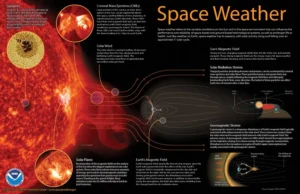
If we ever encounter alien civilizations, how would we know? That’s the SETI question. And in March 2026, scientists found a problem they hadn’t fully considered before.
Research showed that space weather solar winds, plasma turbulence, coronal mass ejections could broaden radio signals from distant civilizations. The signals we’re designed to detect get spread across different frequencies, getting weaker and harder to spot. It’s like trying to hear a whisper in a windstorm.
Science news March 2026 included this research because it fundamentally changes how we search for extraterrestrial intelligence. It means we might be looking in the wrong places, or with the wrong tools, or both. It means the “Great Silence” might not mean what we thought.
Aurora Forecasts and Solar Activity
Speaking of space weather, March 2026 offered something beautiful. The conditions were right for a spectacular show. The northern lights could be among the best in nearly a decade. All because the sun was throwing energy our way in just the right way.
This is what makes science news March 2026 personal. It’s not just about abstract research. Sometimes it’s about opportunities to actually see the universe doing its thing. People packed their cars and headed north. They brought cameras. They waited. And many got to witness something genuinely magnificent.
The Broader Landscape: What March Taught Us
Science news March 2026 painted a picture of a world at an inflection point. Our climate is changing faster than we thought. Our technology is reaching thresholds we never thought we’d cross. Our understanding of biology is expanding in ways that could save lives.
The month showed us both warnings and hopes. The climate data was a warning. The antimatter transport, the lab-grown organs, the bee breakthrough these were hopes. The mix mattered.
What Comes Next
The science news March 2026 that made headlines isn’t just sitting in journals. It’s already influencing decisions. Climate policies are being rewritten. Medical facilities are planning trials. Agricultural departments are revisiting their bee protocols. Research institutions are building on what they’ve learned.
FAQ:
Q: What was the most important science discovery in March 2026?
A: That depends on your perspective. Climate researchers would point to the acceleration in global warming detected by the Potsdam Institute. That finding has massive implications for policy and survival planning. Medical professionals might highlight the lab-grown oesophagus implant in pigs, which proves that tissue engineering isn’t just theory anymore. Both discoveries carry enormous weight, just in different domains. Science news March 2026 showed us these weren’t competing stories they were different pieces of the same larger picture about where we’re headed.
Q: How does the accelerated global warming affect regular people?
A: It changes everything from insurance costs to where you can safely build a home. It influences agricultural decisions and water availability. It affects your food prices and energy bills. When science news March 2026 reported that we could exceed the 1.5°C threshold before 2030, that wasn’t academic language. It meant real policy shifts coming fast. Communities near coasts or in water-stressed regions feel it first, but eventually, everyone feels it.
Q: When will lab-grown organs be available for human transplants?
A: The pig experiments from March 2026 were a critical step, but human trials still lie ahead. Regulatory approval takes time. Safety protocols must be ironclad. Most experts guess we’re looking at a 5-10 year timeframe before this becomes a common treatment option. Science news March 2026 showed the proof of concept exists. Now comes the slow work of making it safe and accessible for patients who need it.
Q: Why does antimatter research matter to me?
A: Directly? It might not change your life anytime soon. Indirectly? It could revolutionize cancer treatment, energy production, and our understanding of the universe. The science news March 2026 breakthrough was about proving we can handle antimatter safely. That opens doors that were previously locked. What comes through those doors could be anything from life-saving treatments to entirely new technologies we haven’t even imagined yet.
Q: What should I do about the climate acceleration?
A: Stay informed. Make personal decisions that align with your values. Support policy changes that take this seriously. Science news March 2026 made it clear that business as usual isn’t working. That means something has to change whether that’s how governments operate, how businesses function, or how individuals live. Start with understanding the stakes. The data is real, and it’s serious.

Expert contributor and editor at Urban Time News specializing in smart city infrastructure urban development technology and modern lifestyle trends. Focused on delivering accurate well researched and data driven insights that help readers better understand the rapidly changing urban landscape. Committed to clear balanced and useful reporting on the trends ideas, and innovations shaping modern city life.