


Introduction
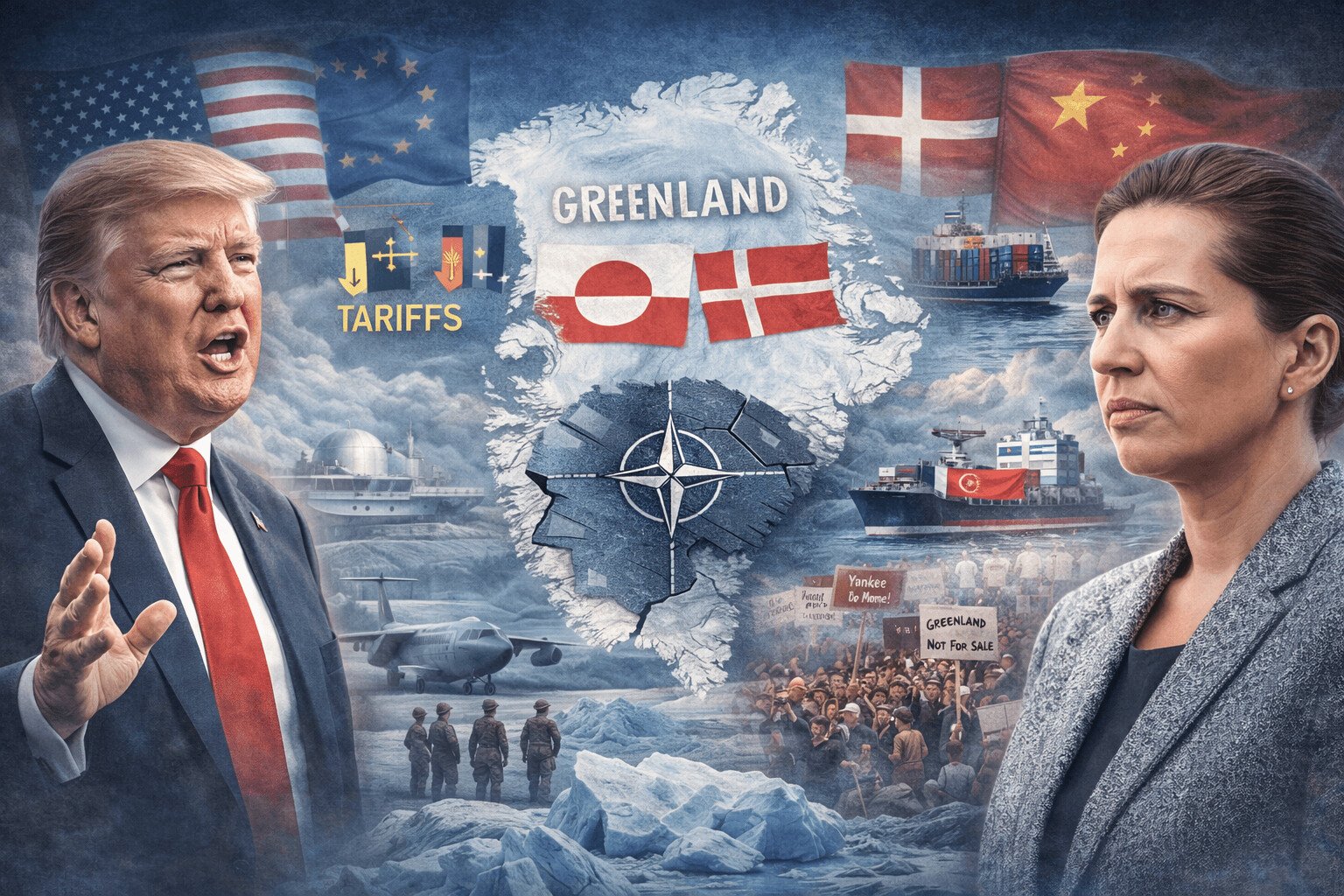
Diplomacy is often measured not by bold threats, but by quiet reassurance. Over the weekend, that contrast could not have been clearer. While a bipartisan group of U.S. Denmark relations lawmakers traveled to Denmark and Greenland to calm rising fears, President Donald Trump reignited global tension with renewed pressure to acquire Greenland this time backed by tariffs and public ultimatums.
What may appear in Washington as political theater is being interpreted in Europe as something far more serious: a fundamental challenge to alliances, sovereignty, and the post-World War II order that the United States itself helped build.
Why Greenland Has Become a Flashpoint
Greenland is not just a frozen expanse at the top of the world. It is a strategic Arctic territory with growing geopolitical importance as climate change opens new shipping routes and access to rare minerals.
Strategic Value vs. Sovereignty
From a U.S. security perspective, Greenland matters because of:
- Its location between North America and Europe
- Existing U.S. military presence
- Proximity to emerging Arctic routes
But strategic interest does not equal ownership.
The Red Line for Allies
For Denmark and Greenland, the issue is not defense cooperation it is coercion. Threatening tariffs to force territorial acquisition crosses a line that NATO allies consider non-negotiable.
Congress Steps In as Crisis Diplomats
The congressional delegation’s visit underscored an often-overlooked truth: when executive rhetoric escalates, lawmakers sometimes become the last line of diplomatic stability.
Reassurance as Damage Control
U.S. senators and representatives met directly with Danish and Greenlandic leaders to send a clear message:
- America’s alliances are broader than one administration
- Congressional support for NATO remains strong
- Dialogue matters more than threats
This was not symbolic travel it was emergency diplomacy.
Bipartisan Concern, Not Partisan Politics
Despite limited Republican participation, lawmakers emphasized that opposition to coercive tactics spans party lines. The fear in Europe is not about Republicans or Democrats it is about predictability.
The Human Impact Often Missed in Washington
One of the most striking aspects of the visit was how deeply personal the issue feels in Greenland.
Fear Beyond Headlines
Greenlandic leaders described anxiety spreading through communities, including among children. For them, this is not a geopolitical debate it is about identity, autonomy, and dignity.
Why Face-to-Face Diplomacy Still Matters
Greenlandic officials stressed that social media threats escalate fear, while direct dialogue creates understanding. That distinction matters more than ever in a digitally amplified political climate.
NATO at Risk in a Multipolar World
The timing of this dispute is especially sensitive. As Russia and China seek to exploit fractures among Western allies, unity is a strategic asset.
Allies Remember History
Denmark’s contributionsn from World War II to Afghanistan are deeply ingrained in its national memory. Public threats from an ally are seen as a betrayal of shared sacrifice.
Who Benefits from Division
European leaders openly warn that undermining NATO cohesion does not weaken rivals it strengthens them. Any erosion of trust among allies is quietly celebrated in Moscow and Beijing.
Public Backlash Signals a Shift
Mass protests in Copenhagen were not merely anti Trump demonstrations. They reflected a broader discomfort with the idea that power can override partnership.
“Yankee Go Home” Is a Warning, Not a Slogan
Such protests are rare in traditionally pro American societies. When they happen, policymakers should take notice.
Soft Power Is Easier to Lose Than Regain
Once public trust erodes, even future administrations face an uphill battle restoring credibility.
What Comes Next
This episode raises larger questions about the future of U.S. leadership.
Can Alliances Survive Transactional Politics?
If alliances are treated as leverage rather than relationships, partners will begin hedging their bets elsewhere.
The Arctic Will Not Get Quieter
As competition intensifies in the Arctic, cooperation not coercion will determine who shapes the region’s future.
Congress May Play a Bigger Global Role
This trip suggests lawmakers could increasingly act as stabilizers when executive diplomacy destabilizes alliances.
Conclusion
The Greenland controversy is not really about land it is about trust. Trust between allies, trust in shared rules, and trust that power will not be used to bully partners into submission.
History shows that alliances crumble not from external attack, but from internal neglect. Whether this moment becomes a footnote or a fracture will depend on whether dialogue continues or whether threats replace diplomacy as America’s preferred language abroad.