

A skin barrier repair cream is a moisturizer designed to support and protect the skin’s outermost layer, known as the stratum corneum. When the skin barrier becomes damaged, it can lose moisture more quickly and become dry, rough, red, tight, or sensitive. Barrier-focused moisturizers commonly contain ingredients such as ceramides, fatty acids, cholesterol, glycerin, hyaluronic acid, and other skin-supporting ingredients that help improve hydration and reduce moisture loss.
How Does a Skin Barrier Repair Cream Work?
The skin barrier acts as a protective shield between the body and the outside environment. The outer layer of the skin contains cells surrounded by lipids, including ceramides, cholesterol, and fatty acids. This structure helps keep water in while limiting the penetration of potential irritants.
When the barrier is disrupted, transepidermal water loss can increase, leaving the skin feeling dry and uncomfortable. Over-cleansing, excessive exfoliation, harsh skincare products, weather changes, and some skin conditions can contribute to barrier damage.
A skin barrier repair cream helps by moisturizing the skin and supporting the barrier’s natural recovery. Occlusive ingredients can reduce water loss, humectants attract and retain water, and skin-identical andr skin-supporting lipids can help replenish components of the outer skin layer.
The goal is not to replace the skin barrier instantly, but to create conditions that allow the skin to become hydrated, comfortable, and more resilient over time.
Signs Your Skin Barrier May Be Damaged
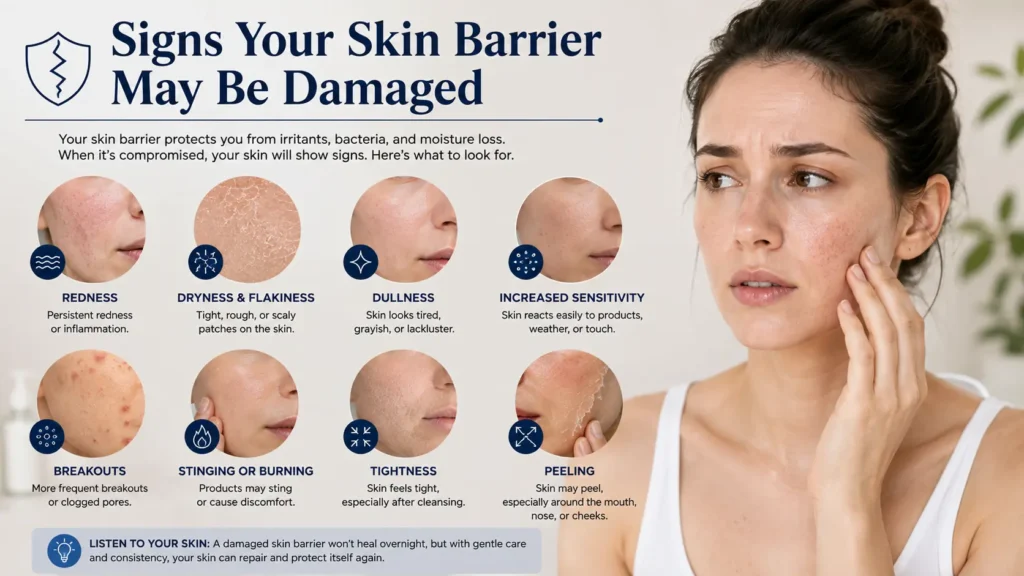
A weakened skin barrier can cause several noticeable changes. Common signs include:
- Persistent dryness and flaking
- Rough and tight-feeling skin
- Redness and irritation
- Stinging and burning when skincare products are applied
- Increased sensitivity to products that were previously tolerated
- Skin that feels unusually dry after cleansing
- Greater reactivity to environmental conditions
These symptoms can also occur with conditions such as eczema, contact dermatitis, rosacea, or other skin problems. If symptoms are severe, persistent, painful, and worsening, a dermatologist can help determine the underlying cause.
Key Ingredients in a Skin Barrier Repair Cream
Not every barrier repair cream contains the same ingredients. However, several ingredient categories are particularly useful for supporting dry and compromised skin.
Ceramides
Ceramides are naturally occurring lipids found in the outer layer of the skin. They play an important role in maintaining the skin barrier and helping reduce moisture loss.
Moisturizers containing ceramides can help improve skin hydration and support barrier function, making them a common choice for dry and sensitive skin.
Cholesterol and Fatty Acids
Cholesterol and fatty acids are also important components of the skin’s natural lipid matrix. Some barrier-focused moisturizers combine these ingredients with ceramides to provide a more comprehensive approach to barrier support.
The specific formulation matters, however, and not every product uses the same concentration and ratio of these ingredients.
Glycerin and Hyaluronic Acid
Glycerin and hyaluronic acid are humectants. Rather than primarily replacing skin lipids, they help attract and retain water in the skin.
They can make dry skin feel softer and more comfortable and are often combined with occlusive and emollient ingredients for longer-lasting hydration.
Niacinamide
Niacinamide, also known as vitamin B3, can support the skin barrier and improve hydration when used in appropriate skincare formulations. It may also have soothing properties.
However, highly concentrated products can sometimes irritate sensitive skin, so a simpler formulation may be preferable when the barrier is severely compromised.
Panthenol
Panthenol, and provitamin B5, is commonly used in moisturizers because of its moisturizing and soothing properties. It can help improve the feel and hydration of dry and irritated skin.
How to Use a Skin Barrier Repair Cream
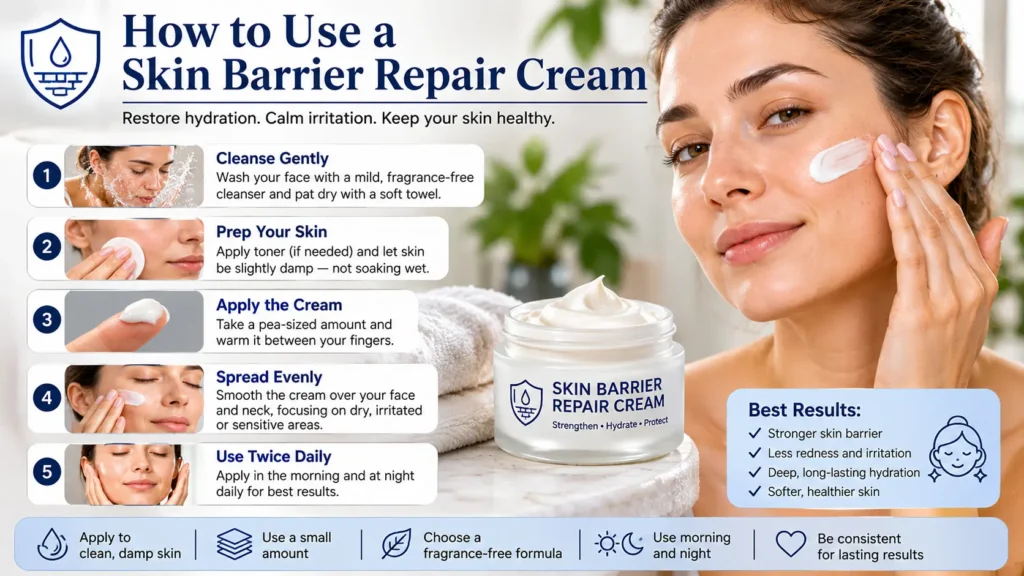
For most people, a barrier repair cream can be used once and twice daily depending on skin needs and the product’s instructions.
A simple routine can include:
- Cleanse with a gentle, non-stripping cleanser if cleansing is necessary.
- Pat the skin dry without rubbing.
- Apply the barrier repair cream while the skin is slightly damp if the product is suitable for this approach.
- Use sunscreen during the day when exposed to sunlight.
- Avoid unnecessary exfoliation and irritating active ingredients while the skin is recovering.
If your skin is irritated, temporarily simplifying your skincare routine may help. Strong exfoliating acids, scrubs, and retinoids can increase irritation in some people, particularly when the skin barrier is already compromised.
How Long Does Skin Barrier Repair Take?
There is no single recovery time because the skin barrier can be affected by different factors and to different degrees.
Mild dryness and irritation may improve within several days with consistent gentle skincare and adequate moisturization. More significant irritation may take several weeks and longer to settle.
Consistency is generally more important than repeatedly changing products. If symptoms continue despite a simplified routine, and if you develop significant redness, swelling, pain, cracking, oozing, and other concerning symptoms, seek advice from a qualified healthcare professional.
How to Choose the Right Barrier Repair Cream
When choosing a skin barrier repair cream, consider your skin’s condition and the rest of your skincare routine.
Look for:
- Ceramides and other skin-supporting lipids
- Glycerin and other humectants
- Emollient ingredients that soften dry skin
- Occlusive ingredients when additional moisture retention is needed
- Fragrance-free formulations if your skin is sensitive
- A simple ingredient list if your skin is currently irritated
A rich cream may be more comfortable for very dry skin, while a lighter lotion and gel cream may work better for people who dislike heavy textures.
There is no single best barrier repair cream for everyone. The most appropriate product depends on skin type, tolerance, climate, and the cause of the irritation.
Can You Use Active Skincare While Repairing the Skin Barrier?
It may be helpful to temporarily reduce and pause potentially irritating active ingredients when the skin is visibly irritated.
Retinoids, exfoliating acids, physical scrubs, and some acne treatments can cause dryness and irritation in certain people. Continuing them aggressively while the skin is already stinging and peeling may make discomfort worse.
Once the skin feels comfortable again, active ingredients can often be reintroduced gradually. If you use prescription treatments, ask your healthcare professional before stopping and changing them.
Frequently Asked Questions
Can I Use a Skin Barrier Repair Cream Every Day?
Yes. Most barrier-supporting moisturizers are designed for regular use. Depending on the product and your skin’s needs, you may use one once and twice daily.
Is a Barrier Repair Cream the Same as a Regular Moisturizer?
Not necessarily. Both can moisturize the skin, but barrier-focused products are often formulated with ingredients specifically selected to support the skin barrier, such as ceramides, fatty acids, cholesterol, humectants, emollients, and occlusives.
Can I Use Retinol While Repairing My Skin Barrier?
If your skin is irritated, dry, and stinging, reducing and temporarily pausing retinol may help minimize additional irritation. Once your skin has recovered, retinol can often be reintroduced gradually if appropriate for you.
If retinol was prescribed by a healthcare professional, discuss any changes with them first.
What Causes a Damaged Skin Barrier?
Common contributing factors include excessive cleansing, over-exfoliation, harsh skincare products, frequent hot-water exposure, dry and cold weather, excessive sun exposure, and some dermatological conditions.
Is a Skin Barrier Repair Cream Good for Sensitive Skin?
It can be. Fragrance-free and relatively simple formulations are often preferable for sensitive and irritated skin. However, even a gentle moisturizer can cause a reaction in some individuals, so discontinue a product if it consistently causes burning, worsening redness, and other concerning symptoms.
When Should You See a Dermatologist?
Moisturizers can help with dryness and support the skin barrier, but persistent symptoms may have another cause.
Consider seeing a dermatologist if you experience:
- Persistent and worsening redness
- Significant pain and swelling
- Severe itching
- Cracking, bleeding, and oozing
- A rash that does not improve
- Repeated reactions to skincare products
- Symptoms that continue despite a gentle skincare routine
A dermatologist can determine whether an underlying skin condition requires specific treatment.
Bottom Line
A skin barrier repair cream helps moisturize dry and irritated skin while supporting the function of the skin’s protective outer layer. Ingredients such as ceramides, fatty acids, cholesterol, glycerin, and panthenol can play useful roles in a well-formulated product.
For compromised skin, a simple routine, gentle cleansing, regular moisturization, and daily sun protection are often more helpful than adding multiple active products. If irritation persists and becomes severe, professional evaluation is more appropriate than continuing to self treat.

Expert contributor and editor at Urban Time News specializing in smart city infrastructure urban development technology and modern lifestyle trends. Focused on delivering accurate well researched and data driven insights that help readers better understand the rapidly changing urban landscape. Committed to clear balanced and useful reporting on the trends ideas, and innovations shaping modern city life.