

Across American cities empty lots rooftops and balconies are being transformed into thriving green spaces this shift raises an obvious question what is urban gardening and why has it become such a powerful movement in simple terms it is the practice of growing plants vegetables herbs or flowers within a city or densely populated area often using limited space creatively. It empowers residents to reconnect with food production while improving the health and appearance of their neighborhoods.
What Is Urban Gardening
its core urban gardening involves cultivating plants in non traditional city settings such as balconies rooftops community lots or small backyard un-like rural farming this approach works within tight spatial constraints relying on containers raised beds vertical structures and hydroponic systems the goal is simple bring fresh produce and greenery closer to where people actually live. Whether its a single apartment planter or a shared neighborhood plot it makes food cultivation accessible to anyone regardless of how much land they own.
What Is an Urban Garden
An urban garden is the physical space where this activity takes place it can be a small container garden on a fire escape a rooftop greenhouse or a larger communal plot shared by neighbors urban gardens typically prioritize efficient use of space sunlight and water often incorporating raised beds or vertical planters to maximize yield.These gardens frequently double as social hubs giving communities a shared purpose and a place to learn practical skills.
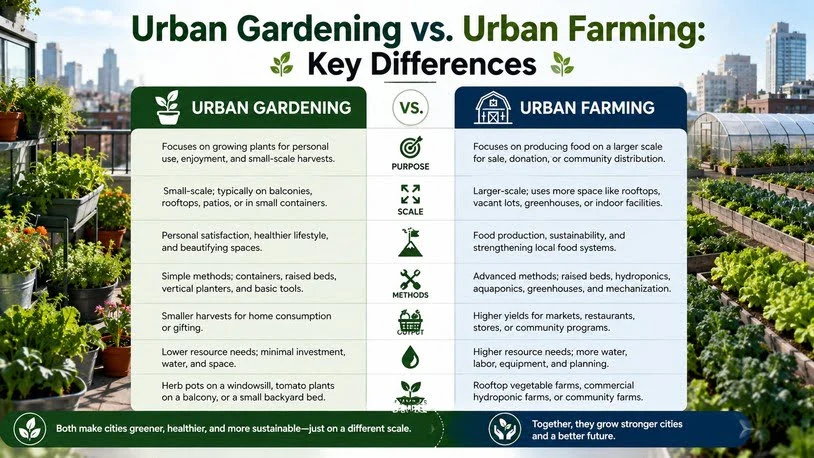
Urban Gardening vs. Urban Farming: Key Differences
Define Urban Farming
While closely related the two practices arent identical to define urban farming clearly it refers to the more structured often commercial cultivation of crops or livestock within city limits typically intended for sale or larger scale distribution. Home based growing by contrast is usually smaller in scale and personal or community oriented focused on household consumption or neighborhood sharing rather than profit a related distinction often asked about is the difference between urban agriculture and community gardening.
Urban agriculture is the broader umbrella term covering both farming and gardening activities in cities including food production distribution and marketing. Community gardening meanwhile is a specific format where multiple residents collectively manage a shared plot splitting labor and harvests.
Benefits of Urban Gardening and Farming
Advantages of Urban Agriculture for Communities
The advantages of urban agriculture extend well beyond fresh produce urban farming benefits include improved food security since communities gain direct access to nutritious food without relying entirely on long supply chains. Environmentally plants reduce urban heat and improve air quality while green spaces support local biodiversity.
Socially this practice builds stronger neighborhoods by encouraging collaboration skill sharing and civic pride. Economically it can lower grocery costs and even create small business opportunities through farmers’ markets.For many families it also offers a therapeutic outlet reducing stress while promoting physical activity and healthier eating habits.
Principles of Sustainable Urban Farming
Sustainable urban farming focuses on minimizing environmental impact while maximizing productivity this includes composting food waste to enrich soil harvesting rainwater for irrigation and choosing native or drought tolerant plants suited to local climates. Many urban farmers also adopt organic growing methods avoiding synthetic pesticides to protect pollinators and soil health.
Vertical farming and hydroponic systems are increasingly popular for sustainable urban farming allowing higher yields in smaller footprints while conserving water as cities continue to grow these practices will play a critical role in building resilient self sufficient local food systems.
How to Get Started with Urban Gardening
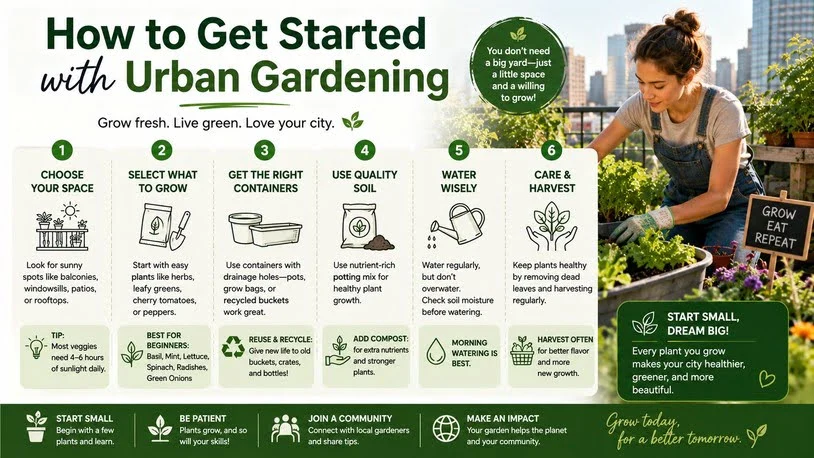
Anyone can begin this journey with minimal investment start by assessing available sunlight and space whether that a windowsill balcony or shared lot. Choose beginner friendly crops like herbs tomatoes or leafy greens and invest in quality soil and proper drainage. Joining a local community garden is also an excellent way to learn from experienced growers while accessing shared tools and resources.
Frequently Asked Questions
What is urban gardening. It refers to the practice of growing plants vegetables or herbs within a city environment using spaces like balconies rooftops or small plots to produce food and greenery close to home.
What is an urban gardener. An urban gardener is anyone who cultivates plants in a city setting whether managing a personal container garden or participating in a larger shared community space.
What does gardening mean in urban dictionary terms. Informally the term is used to describe resourceful small space growing methods that city residents use to produce food despite limited land access.
What is the difference between urban agriculture and community gardening. Urban Agriculture is a broad term covering all city based food production while community gardening specifically refers to shared plots managed collectively by residents.
What gardening zone is Urbana 2. Urbana Illinois falls within USD A Hardiness Zone 6a meaning gardeners should select plants suited to moderate winters and a defined growing season.
This movement continues to gain momentum as more Americans seek sustainable hands on ways to grow their own food whether through a small balcony planter or a full community farm it is reshaping how cities think about food community and green living.

Expert contributor and editor at Urban Time News specializing in smart city infrastructure urban development technology and modern lifestyle trends. Focused on delivering accurate well researched and data driven insights that help readers better understand the rapidly changing urban landscape. Committed to clear balanced and useful reporting on the trends ideas, and innovations shaping modern city life.