

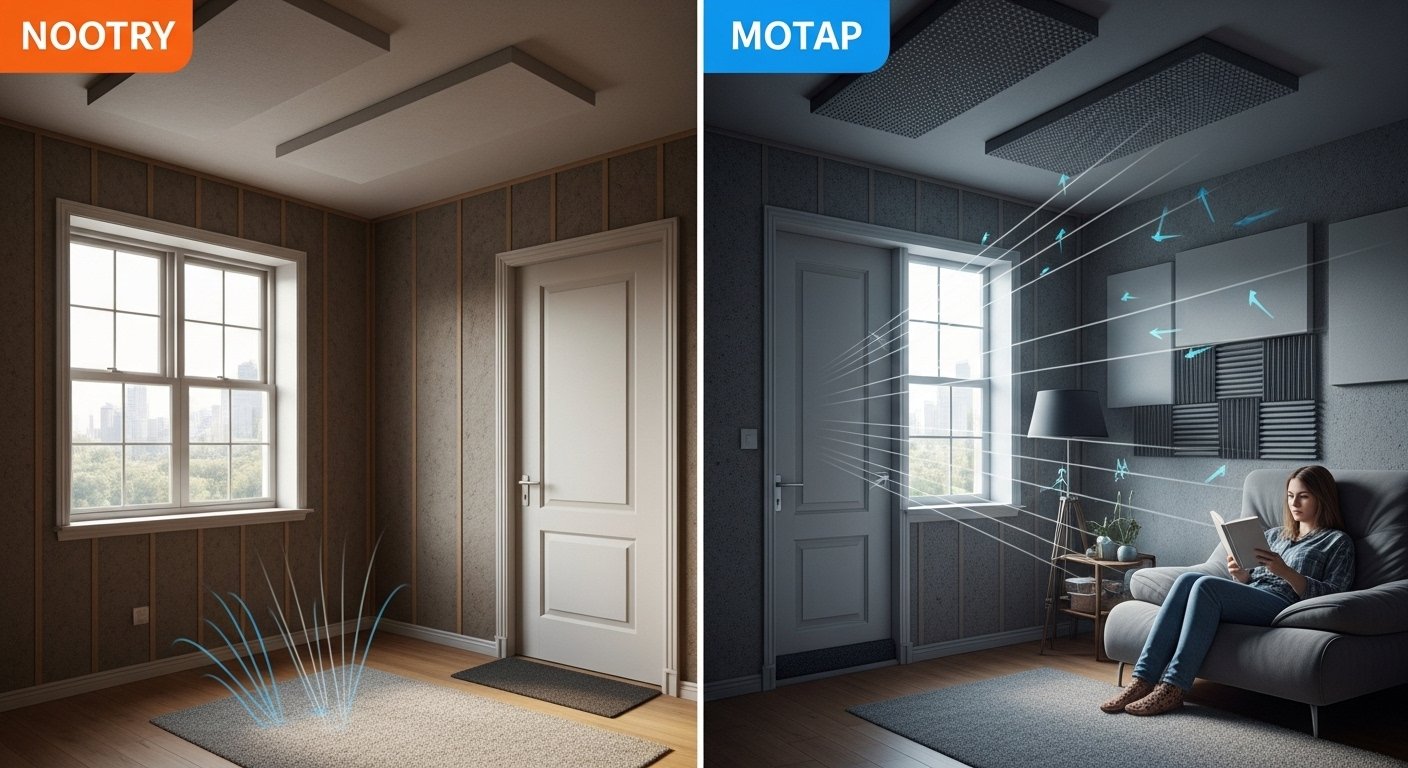
Traffic at 6 a.m. Honking at midnight. That one motorcycle that seems to circle your block for sport.
If you live near a busy road, street noise can chip away at your sleep, focus, and sanity. The good news? You can significantly reduce it. The better news? You don’t necessarily need to rebuild your entire house.
This guide explains how to soundproof a room from street noise using practical, proven strategies. We’ll cover what actually works, what’s a waste of money, and how to prioritize your upgrades for maximum impact.
Why Street Noise Gets Inside So Easily
Before you fix the problem, it helps to understand it.
Street noise is primarily airborne sound—car engines, sirens, voices, tire friction. Sound travels through air, hits your building, and enters through the weakest points:
- Windows
- Doors
- Gaps and cracks
- Thin walls
- Air vents
According to the U.S. Environmental Protection Agency, environmental noise exposure can contribute to sleep disturbance and reduced quality of life. So this isn’t just about comfort—it’s about health.
To block noise effectively, you need to:
- Add mass
- Seal air gaps
- Absorb vibration
- Decouple structures where possible
Let’s break that down into practical steps.
Step 1: Seal All Gaps (The Most Overlooked Fix)
If sound were water, even tiny cracks would leak like crazy.
Use Acoustic Sealant
Regular caulk works for drafts, but acoustic sealant stays flexible and blocks sound better. Apply it around:
- Window frames
- Baseboards
- Electrical outlets
- Wall cracks
Even small openings can dramatically reduce your soundproofing effectiveness.
Install Weatherstripping
Doors are often the biggest weak point. Add:
- High-quality weatherstripping around the frame
- A door sweep at the bottom
You’d be surprised how much street noise slips through that thin line under your door.
Step 2: Upgrade or Reinforce Your Windows
Windows are typically the biggest culprit when it comes to traffic noise.
Option 1: Window Inserts
Window inserts are clear acrylic panels installed inside your existing window frame. They create an air gap that reduces sound transmission.
They’re often far cheaper than full window replacement and can significantly reduce noise without major construction.
Option 2: Double or Triple Glazing
If you’re ready for a bigger investment, upgrading to double- or triple-pane windows helps reduce sound transmission. According to guidance from the U.S. Department of Energy, multi-pane windows improve insulation performance—and that same added mass and air space also helps reduce noise.
Option 3: Heavy Soundproof Curtains
Thick, multi-layered curtains can help absorb some sound reflections and slightly dampen incoming noise.
Important note: Curtains do not truly soundproof a room, but they can reduce echo and soften high-frequency sounds. Think of them as a supporting actor, not the hero.
Step 3: Add Mass to the Walls
Thin drywall does little against low-frequency traffic rumble.
Install Mass-Loaded Vinyl (MLV)
Mass-loaded vinyl is a dense, flexible material installed behind drywall or over existing walls. It adds significant mass without requiring major structural changes.
More mass = less vibration = less sound transmission.
Add Another Layer of Drywall
For more serious soundproofing:
- Add a second layer of drywall
- Use damping compound (like Green Glue) between layers
This approach converts sound energy into heat through vibration damping. It’s highly effective for urban environments with constant traffic noise.
Step 4: Treat the Weakest Wall First
Not all walls need equal treatment.
The wall facing the street likely transmits the most noise. Focus upgrades there first to maximize results and minimize cost.
If you’re in an apartment, check lease agreements before major modifications. Some upgrades (like inserts and sealant) are renter-friendly, while full drywall upgrades may not be.
Step 5: Improve Door Soundproofing
Hollow-core interior doors leak sound like sieves.
Upgrade to a Solid-Core Door
Solid-core doors significantly reduce sound transmission compared to hollow ones.
Add Door Panels or MLV
If replacing the door isn’t possible, attach mass-loaded vinyl or a decorative soundproof panel to the interior side.
Again, seal the perimeter carefully.
Step 6: Address Air Vents and HVAC Openings
Air vents can transmit sound directly from outside or other rooms.
Options include:
- Acoustic vent covers
- Sound baffles
- Rerouted duct paths (in advanced setups)
Be careful not to block airflow completely. Proper ventilation is essential for indoor air quality and safety.
Step 7: Use White Noise Strategically
This doesn’t block sound—it masks it.
White noise machines or fans can make street noise less noticeable, especially at night. Research published by institutions like Harvard Medical School suggests consistent background noise can help improve sleep continuity in noisy environments.
It’s not a structural solution, but it’s inexpensive and effective for many people.
What Doesn’t Work (Despite What the Internet Says)
Let’s clear up common myths.
❌ Egg cartons on walls
They do not soundproof a room. They barely absorb sound.
❌ Thin foam panels
Acoustic foam reduces echo inside a room but does not block outside noise effectively.
❌ Rugs alone
Floor coverings help with impact noise, not airborne street noise.
If your goal is blocking traffic noise, focus on mass and sealing, not decorative foam.
Budget-Friendly Soundproofing Plan
If you’re working with limited funds, follow this order:
- Seal gaps and cracks
- Weatherstrip doors
- Add a door sweep
- Install window inserts
- Use heavy curtains
- Add mass to the street-facing wall
You don’t need to do everything at once. Each step compounds the results of the previous one.
Advanced Soundproofing (For Serious Noise Problems)
If you live next to a highway or major intersection, basic upgrades may not be enough.
Advanced solutions include:
- Resilient channel systems
- Double-stud wall construction
- Decoupled framing
- Floating floors
These methods physically separate structures so vibrations don’t transfer directly through framing.
They’re more common in recording studios—but increasingly relevant in dense urban housing.
How Much Noise Reduction Can You Expect?
Realistically:
- Sealing gaps alone may reduce noticeable noise significantly
- Window inserts can reduce perceived traffic noise dramatically
- Full wall upgrades can create major improvements
Soundproofing is cumulative. One upgrade helps. Multiple upgrades change your experience entirely.
However, complete silence is unrealistic in most urban settings without structural renovation.
A Quick Word on Expectations
Soundproofing works best when you:
- Identify the main entry point
- Use layered solutions
- Combine sealing + mass + absorption
If you try one method in isolation and expect total silence, you’ll likely be disappointed.
Think in terms of reduction, not elimination.
When to Consult a Professional
If:
- Noise levels are extreme
- You’re planning structural renovation
- You own the property and want permanent changes
An acoustical consultant or contractor can measure sound transmission and recommend targeted solutions.
Look for professionals with building acoustics experience—not just general contractors.
Final Thoughts: Build a Quieter Space, Step by Step
Street noise is frustrating—but manageable.
Start small. Seal the gaps. Reinforce your windows. Add mass where it matters most.
You don’t need a recording studio. You just need smart, layered improvements applied in the right order.
When done correctly, soundproofing transforms more than a room. It improves sleep, focus, and overall comfort.
And honestly? Waking up without the 6 a.m. garbage truck soundtrack is priceless.
How to Soundproof a Room From Street Noise
Traffic at 6 a.m. Honking at midnight. That one motorcycle that seems to circle your block for sport.
If you live near a busy road, street noise can chip away at your sleep, focus, and sanity. The good news? You can significantly reduce it. The better news? You don’t necessarily need to rebuild your entire house.
This guide explains how to soundproof a room from street noise using practical, proven strategies. We’ll cover what actually works, what’s a waste of money, and how to prioritize your upgrades for maximum impact.
Why Street Noise Gets Inside So Easily
Before you fix the problem, it helps to understand it.
Street noise is primarily airborne sound—car engines, sirens, voices, tire friction. Sound travels through air, hits your building, and enters through the weakest points:
- Windows
- Doors
- Gaps and cracks
- Thin walls
- Air vents
According to the U.S. Environmental Protection Agency, environmental noise exposure can contribute to sleep disturbance and reduced quality of life. So this isn’t just about comfort—it’s about health.
To block noise effectively, you need to:
- Add mass
- Seal air gaps
- Absorb vibration
- Decouple structures where possible
Let’s break that down into practical steps.
Step 1: Seal All Gaps (The Most Overlooked Fix)
If sound were water, even tiny cracks would leak like crazy.
Use Acoustic Sealant
Regular caulk works for drafts, but acoustic sealant stays flexible and blocks sound better. Apply it around:
- Window frames
- Baseboards
- Electrical outlets
- Wall cracks
Even small openings can dramatically reduce your soundproofing effectiveness.
Install Weatherstripping
Doors are often the biggest weak point. Add:
- High-quality weatherstripping around the frame
- A door sweep at the bottom
You’d be surprised how much street noise slips through that thin line under your door.
Step 2: Upgrade or Reinforce Your Windows
Windows are typically the biggest culprit when it comes to traffic noise.
Option 1: Window Inserts
Window inserts are clear acrylic panels installed inside your existing window frame. They create an air gap that reduces sound transmission.
They’re often far cheaper than full window replacement and can significantly reduce noise without major construction.
Option 2: Double or Triple Glazing
If you’re ready for a bigger investment, upgrading to double- or triple-pane windows helps reduce sound transmission. According to guidance from the U.S. Department of Energy, multi-pane windows improve insulation performance—and that same added mass and air space also helps reduce noise.
Option 3: Heavy Soundproof Curtains
Thick, multi-layered curtains can help absorb some sound reflections and slightly dampen incoming noise.
Important note: Curtains do not truly soundproof a room, but they can reduce echo and soften high-frequency sounds. Think of them as a supporting actor, not the hero.
Step 3: Add Mass to the Walls
Thin drywall does little against low-frequency traffic rumble.
Install Mass-Loaded Vinyl (MLV)
Mass-loaded vinyl is a dense, flexible material installed behind drywall or over existing walls. It adds significant mass without requiring major structural changes.
More mass = less vibration = less sound transmission.
Add Another Layer of Drywall
For more serious soundproofing:
- Add a second layer of drywall
- Use damping compound (like Green Glue) between layers
This approach converts sound energy into heat through vibration damping. It’s highly effective for urban environments with constant traffic noise.
Step 4: Treat the Weakest Wall First
Not all walls need equal treatment.
The wall facing the street likely transmits the most noise. Focus upgrades there first to maximize results and minimize cost.
If you’re in an apartment, check lease agreements before major modifications. Some upgrades (like inserts and sealant) are renter-friendly, while full drywall upgrades may not be.
Step 5: Improve Door Soundproofing
Hollow-core interior doors leak sound like sieves.
Upgrade to a Solid-Core Door
Solid-core doors significantly reduce sound transmission compared to hollow ones.
Add Door Panels or MLV
If replacing the door isn’t possible, attach mass-loaded vinyl or a decorative soundproof panel to the interior side.
Again, seal the perimeter carefully.
Step 6: Address Air Vents and HVAC Openings
Air vents can transmit sound directly from outside or other rooms.
Options include:
- Acoustic vent covers
- Sound baffles
- Rerouted duct paths (in advanced setups)
Be careful not to block airflow completely. Proper ventilation is essential for indoor air quality and safety.
Step 7: Use White Noise Strategically
This doesn’t block sound—it masks it.
White noise machines or fans can make street noise less noticeable, especially at night. Research published by institutions like Harvard Medical School suggests consistent background noise can help improve sleep continuity in noisy environments.
It’s not a structural solution, but it’s inexpensive and effective for many people.
What Doesn’t Work (Despite What the Internet Says)
Let’s clear up common myths.
❌ Egg cartons on walls
They do not soundproof a room. They barely absorb sound.
❌ Thin foam panels
Acoustic foam reduces echo inside a room but does not block outside noise effectively.
❌ Rugs alone
Floor coverings help with impact noise, not airborne street noise.
If your goal is blocking traffic noise, focus on mass and sealing, not decorative foam.
Budget-Friendly Soundproofing Plan
If you’re working with limited funds, follow this order:
- Seal gaps and cracks
- Weatherstrip doors
- Add a door sweep
- Install window inserts
- Use heavy curtains
- Add mass to the street-facing wall
You don’t need to do everything at once. Each step compounds the results of the previous one.
Advanced Soundproofing (For Serious Noise Problems)
If you live next to a highway or major intersection, basic upgrades may not be enough.
Advanced solutions include:
- Resilient channel systems
- Double-stud wall construction
- Decoupled framing
- Floating floors
These methods physically separate structures so vibrations don’t transfer directly through framing.
They’re more common in recording studios but increasingly relevant in dense urban housing
How Much Noise Reduction Can You Expect?
Realistically:
- Sealing gaps alone may reduce noticeable noise significantly
- Window inserts can reduce perceived traffic noise dramatically
- Full wall upgrades can create major improvements
Soundproofing is cumulative One upgrade helps Multiple upgrades change your experience entirely.
However complete silence is unrealistic in most urban settings without structural renovation
A Quick Word on Expectations
Soundproofing works best when you:
- Identify the main entry point
- Use layered solutions
- Combine sealing + mass + absorption
If you try one method in isolation and expect total silence you’ll likely be disappointed
Think in terms of reduction not elimination
When to Consult a Professional
If:
- Noise levels are extreme
- You’re planning structural renovation
- You own the property and want permanent changes
An acoustical consultant or contractor can measure sound transmission and recommend targeted solutions
Look for professionals with building acoustics experience not just general contractors
Final Thoughts Build a Quieter Space Step by Step
Street noise is frustrating but manageable
Start small Seal the gaps Reinforce your windows Add mass where it matters most
You don’t need a recording studio You just need smart layered improvements applied in the right order
When done correctly soundproofing transforms more than a room It improves sleep focus and overall comfort
And honestly Waking up without the 6 a m garbage truck soundtrack is priceless
